4 Creative Ways to Entertain Your Adult Cat
It’s easy to have fun with a kitten, but once your cat grows up, you may find yourself settling into a routine that’s, well, boring—for you and your cat. Luckily, it’s easy to liven things up with our 4 ways to have more fun with your adult cat.
Understanding the Feline Mind
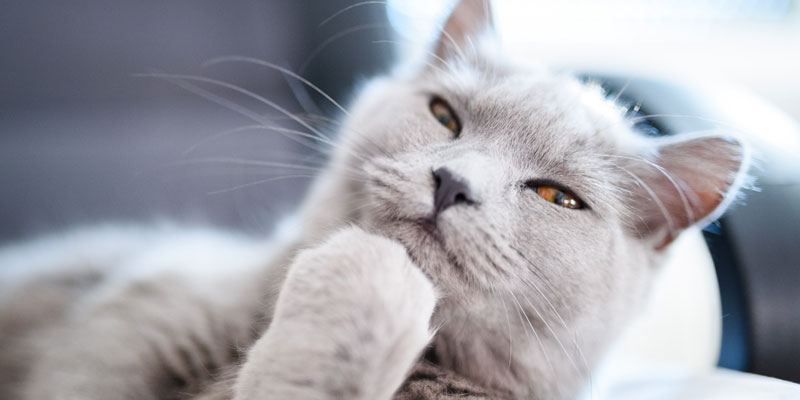
Have you ever looked at your cat while they stare intensely into the void and wondered, what exactly is going on in there? If so, you definitely aren’t alone!
We’ve already covered cat dreams, so now we’re naturally taking a look at the feline mind.
The brain of a cat is a fascinating, complex organ that drives their quirky, lovable, and sometimes downright bizarre behaviors.
From the zoomies, to spraying, to going #2 outside the litter box—every behavior is backed by a small, but mighty cat brain.
How Big is a Cat’s Brain?
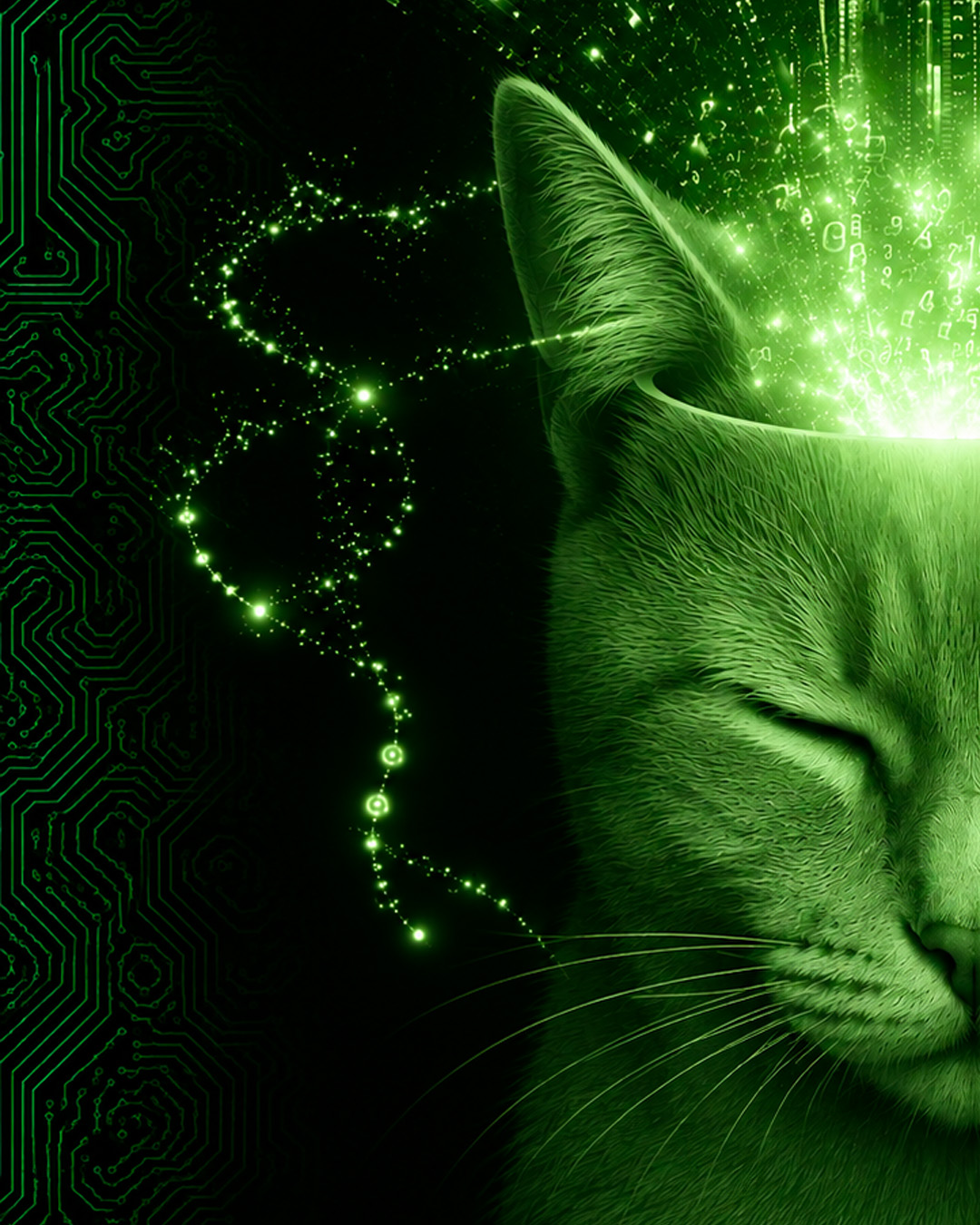
When people ask, “how big is a cat’s brain?”, the answer often surprises them!
- Cat brain size: A domestic cat’s brain is relatively tiny, measuring about 2 inches long and weighing roughly 25 to 30 grams—which is about the weight of a standard AA battery.
- Small but mighty: Don’t let that small size fool you. Despite having a smaller overall brain volume than many dogs, felines pack a massive cognitive punch. A cat’s cerebral cortex boasts up to 250 million neurons, which isn’t too far off from their canine counterparts (530 million neurons). This incredibly high neuron density is what gives your kitty such fast-reacting processing power for sensory data and agile movement!
If you need further comparison, use this chart to see how a cat’s brain stacks up against similar animals/pets.
| Animal | Avg. Brain Weight | Everyday Object Equivalent (Weight & Size) |
| Mouse | ~0.4 grams | The weight of a small paperclip; Size of a pea. |
| Rat | ~2 grams | The weight of a U.S. dime; Size of a jellybean. |
| Ferret | ~5 grams | The weight of a U.S. nickel; Size of a large blueberry. |
| Rabbit | ~12 grams | The weight of an empty soda can; Size of a cherry. |
| Squirrel | ~22 grams | The weight of a slice of bread; Size of a large grape. |
| Porcupine | ~25 grams | Essentially a tie! Roughly the exact same weight and size as a cat. |
Cat Brain Function: How Does It Compare to humans?
You might be shocked to learn that a cat’s brain shares roughly a 90% structural similarity with a human brain!
- Structure: Both human and cat brains feature complex surface folding. This folding significantly increases the surface area for high-level cat brain function and complex cognitive processing.
- Orientation: While human brains are oriented top-down, a feline’s brain is oriented front-to-back. This layout accommodates a larger cerebellum, providing them with that famous predatory balance, agility, and their “always land on their feet” superpower.
The Indoor vs. Outdoor Cat Brain: Are They Different?
A common debate among pet parents is whether indoor and outdoor cats develop differently. Do they have different brains?
Genetically and anatomically, the answer to this is no!
Whether your cat lounges on a velvet pillow all day or prowls the neighborhood, their physical brain size and structure are exactly the same. Interestingly, according to Smithsonian Magazine, modern domestic cats do have slightly smaller brains than their wild ancestors—a well-documented evolutionary trait across many domesticated species.
However, while their physical brains are identical, outdoor environments constantly bombard free-roaming cats with intense mental stimulation—new sights, ultrasonic bird songs, and complex smells that naturally engage their instincts.
Indoor cats rely entirely on you for this vital enrichment. Without interactive toys, climbing spaces, and dedicated playtime, an indoor house cat brain can easily become bored and under-stimulated.
cat brains and the litter box
It may seem like a built-in feature of the brain of a cat— even tiny, unweaned kittens often know how to use a litter box.
Owners often assume this is just because cats are naturally fussy clean freaks, but it’s actually driven by a deep evolutionary survival instinct! In the wild, smaller felines bury their waste to mask their scent from larger predators and dominant rival cats.
Cat litter can mimic the soft, sandy dirt they would naturally use outdoors, triggering an ingrained, hardwired urge to dig, eliminate, and cover.

Fun Facts You Might Not Know ABOUT A CAT’S BRAIN
- Dream Weavers: Cats experience REM (Rapid Eye Movement) sleep, meaning they actively dream just like we do. If you see their paws twitching while they snooze, they might be chasing a dream-mouse!
- Elephant-Like Memory: Felines possess highly robust long-term and procedural memory. They can recall routines, favorite hiding spots, and specific experiences for a decade or more.
- Aging Like Us: Feline brains age in a remarkably similar way to human brains, experiencing comparable patterns of age-related atrophy over their lifespans.
What is the absolute weirdest thing your cat does that makes you question how their brain works? Let us know in the comments below!

Crazy About Cats?
Sign up for our monthly email to get the inside scoop on deals, cat care tips, contests, and more!
Find Your Best Litter







RELATED POSTS
THE CURIOUS TALE OF CATS AND BOXES
The curious tales of cats and boxes — including five reasons for this cardboard love affair backed by science.
THE ULTIMATE GUIDE TO CATS IN DALLAS-FORT WORTH, TX
Discover all things cats in the Dallas-Fort Worth area — from top-rated cat cafes and adoption centers to can't-miss local events.
WHY IS MY CAT AVOIDING THE WATER BOWL?
Is your cat avoiding the water bowl? From whisker fatigue to survival instincts, discover the hidden reasons cats won't drink water and how to help.